
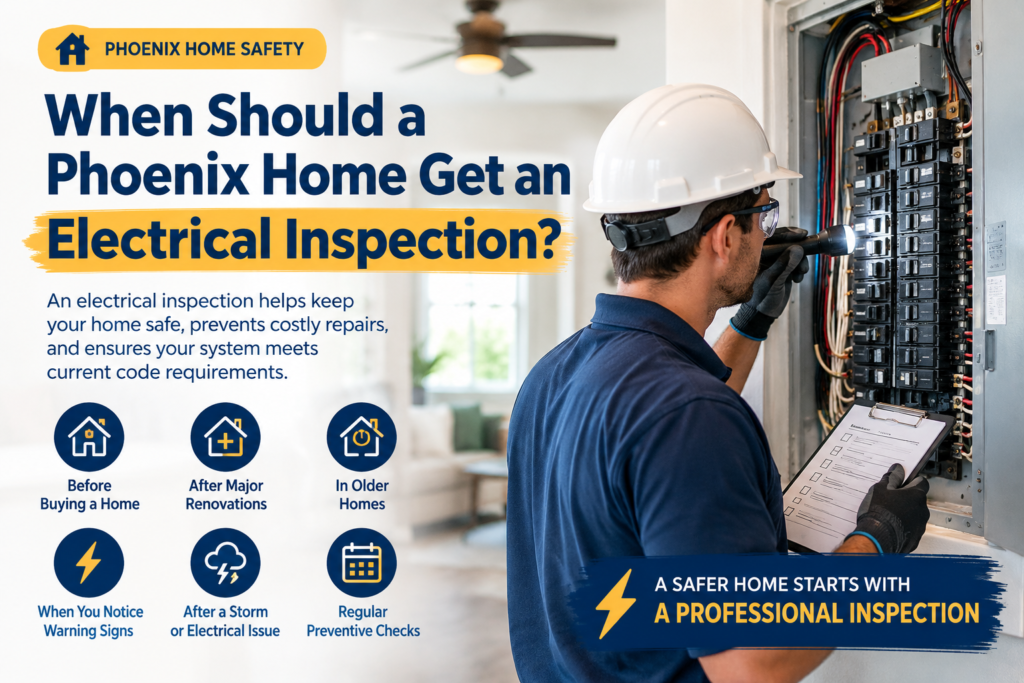
A Phoenix home should get an electrical inspection when you notice warning signs like tripping breakers or warm outlets, before buying or selling a property, after remodeling or adding major appliances, and whenever the home’s wiring or panel is old enough that you don’t know its condition. If none of those apply, an occasional check-up is still a sensible way to catch problems early.
Electrical systems are mostly hidden inside walls, ceilings, and panels, so problems rarely announce themselves until something fails. Add the heavy summer demand on air conditioning in the Valley, and the system in your home may work harder than you realize. This guide covers when an inspection makes sense, what it looks at, and which symptoms should never wait.
Signs Your Phoenix Home May Need an Electrical Inspection
Many electrical problems start small. These are the signs that most often justify a professional evaluation:
- Breakers that trip repeatedly. An occasional trip can happen with an overloaded circuit, but a breaker that keeps tripping may point to a wiring fault, a failing breaker, or a circuit carrying more than it should.
- Flickering or dimming lights. If lights dim when the AC or another large appliance starts, or flicker throughout the house, the cause could be a loose connection or an overstressed circuit.
- Warm or discolored outlets and switch plates. Outlets should not feel hot. Brown or black marks around a receptacle suggest overheating.
- Buzzing, crackling, or humming sounds from outlets, switches, or the panel.
- A burning or “hot plastic” smell with no obvious source.
- Outlets that don’t work, feel loose, or spark when you plug something in.
- Two-prong outlets or too few outlets, which often lead to heavy use of extension cords and power strips.
- Frequent bulb burnouts in the same fixture, which can signal a wiring or fixture issue.
- Shocks or tingling when touching appliances or switches.
One of these symptoms doesn’t always mean something is dangerous. But electrical problems tend to get worse over time, and a professional can tell the difference between a minor annoyance and a real hazard.
When Buying or Selling a Phoenix Home
A standard home inspection typically includes a general look at the electrical system, but it isn’t a detailed evaluation by an electrician. A separate home electrical inspection can give you a closer look at the panel, wiring, and grounding.
If you’re buying, an electrician’s inspection can help you understand what you’re taking on, especially with an older property, a home with additions, or one where past DIY work is suspected. Knowing about outdated wiring or an overloaded panel before closing lets you plan repairs or discuss them with the seller.
If you’re selling, a pre-listing inspection can help you spot and address issues before a buyer’s inspector flags them. That can reduce surprises during negotiations.
Requirements and customs around inspections vary, so ask your real estate agent or attorney what applies to your transaction.
Older Homes and Outdated Electrical Systems
Phoenix has a wide mix of housing, from newer builds to mid-century homes. Electrical problems in older homes are common simply because the systems were designed for a different era of electrical use. Decades ago, homes weren’t expected to power multiple computers, large TVs, EV chargers, and high-capacity cooling at once.
Things that deserve a closer look in an older home include:
- Outdated wiring that has aged, been modified, or no longer fits modern demand
- An aging electrical panel with limited capacity or worn breakers
- Ungrounded outlets or inconsistent grounding
- Overloaded circuits from adding devices over the years
- Past DIY or unpermitted work that may not have been done to current standards
Age alone doesn’t mean a system is unsafe, and some older homes have been well maintained or updated. The point is that you often can’t tell by looking. An electrical panel inspection and a review of accessible wiring can give you facts instead of guesses.
After Remodeling or Major Electrical Changes
Renovations often change how a home uses electricity, even when the project isn’t “electrical” at heart. Consider an evaluation after:
- Kitchen or bathroom remodels with new appliances or lighting
- Room additions, garage conversions, or finished outdoor spaces
- Adding a hot tub, workshop equipment, or an EV charger
- Installing new HVAC equipment or other high-demand appliances
- Any work done by someone you’re not sure was qualified
New loads can push an existing panel and circuits closer to their limits. An inspection can confirm that the system supports the changes and that the work is safe. If permits or inspections were required for the project, your local building authorities can tell you what applies.
What Does an Electrical Inspection Check?
The scope depends on the home and the professional, so this is not a universal checklist. A qualified electrician may evaluate:
- The main panel and breakers: condition, labeling, signs of overheating or corrosion, and general capacity
- Visible wiring: in accessible areas like the attic, garage, or panel enclosure
- Outlets and switches: proper function, secure mounting, and signs of wear or heat damage
- Grounding and bonding: whether the system appears properly grounded
- Safety devices: such as GFCI and AFCI protection where present
- Smoke and carbon monoxide alarm placement and function, in some cases
- Visible hazards: exposed connections, damaged cable, or improvised repairs
Inspectors generally evaluate what they can safely see and access. If you have specific concerns, tell the electrician beforehand so they can focus on them.
How Often Should a Home Have an Electrical Inspection?
There is no single schedule that fits every home. Instead of a fixed timeline, think in terms of triggers and conditions:
- After any warning signs described above, as soon as reasonably possible
- Before buying or after moving in to an older or unfamiliar home
- After major renovations or new high-demand equipment
- Periodically for older homes, particularly if the wiring or panel hasn’t been evaluated in many years
- If you simply don’t know the age or condition of your electrical system
If you’re unsure, an electrician can recommend a reasonable follow-up interval based on what they find.
When to Call an Electrician Immediately
Some situations are not “schedule it for next week” problems. Contact a licensed electrician right away if you notice:
- Smoke coming from an outlet, switch, appliance, or the panel
- Sparking or arcing
- A persistent burning smell
- Exposed or damaged wiring
- Outlets, plugs, or panels that are hot to the touch
- Buzzing from the panel combined with other symptoms
- Water exposure to outlets, wiring, or the panel
If you see smoke or fire, leave the area and call 911 first. If it’s safe to do so, turn off power at the main breaker, but never touch anything that is sparking, wet, or visibly damaged.
Important safety note: Electrical work can cause shock, fire, and serious injury. Do not try to repair wiring, replace panels, or open energized equipment yourself. Even tasks that look simple can become dangerous when you can’t see what’s behind the wall.
Schedule an Electrical Inspection in Phoenix, AZ
If any of the situations above sound familiar, a qualified professional can help you understand what’s going on and what, if anything, needs attention. You can learn more about getting an electrical inspection in Phoenix, AZ and what to expect from the process.
An inspection won’t fix problems by itself, but it gives you clear information so you can make decisions about repairs, upgrades, or a property purchase with confidence. For most homeowners, that peace of mind is worth having.